Why and How to Stop Digging Into Your Emergency Savings
11/8/20253 min read

Why and How to stop dipping into your Emergency Savings
Building an emergency fund sounds simple: set money aside and don’t touch it unless it’s a real emergency. Yet so many of us find ourselves transferring money into that savings account… only to pull it right back out a week later.
If this keeps happening, it’s not because you lack discipline or don’t care about saving. Usually, the real issue lies in your daily money habits.
Here are the two main reasons your emergency fund isn’t growing — and what to do about it.
1. You’re Not Tracking Your Spending
Most people think they know where their money goes. But when asked how much they spent on coffee, takeout, or impulse shopping last month, their answer is usually a rough guess.
The problem is:
You can’t change what you don’t measure.
Tracking your spending gives you a clear picture of your financial behavior. When you write down every purchase — daily — you gain awareness. You start noticing patterns, unnecessary spending, and emotional spending triggers.
Here’s how to track effectively:
• Daily: Write down what you spent, no matter how small.
• Bi-weekly or Weekly: Review and categorize your purchases.
• At the End of the Month: Look for trends and identify where money is slipping away.
When you track more often, saving becomes easier because:
• You make conscious decisions instead of impulse buys.
• You see where small habits are draining your bank account.
• You naturally start choosing differently.
The more frequently you track your spending, the better you become at saving money and hitting your financial goals.
Tracking your expenses gives you visibility — and visibility creates control.
2. Your Budget Isn’t Realistic
Let’s be honest: budgets fail when we budget for the person we wish we were instead of the person we actually are.
For example, you might say:
“This month, I’m spending $0 on takeout.”
But if you’ve ordered takeout every week for the past six months, suddenly going cold turkey is unrealistic — and that pressure sets you up to fail.
A realistic budget acknowledges your lifestyle.
Here’s a personal example:
I used to spend $200 every month on takeout.
Not because I loved takeout — but because I consistently woke up too late to pack lunch for work. It was pure convenience.
I realized the problem wasn’t the takeout — it was my lack of planning. So, I adjusted:
• I started meal prepping lunches.
• I gave myself a $60 monthly takeout budget, because I know I’ll have lazy days.
• That change alone saves me $140 each month — which now goes directly into my emergency fund.
That’s $1,680 saved in a year, without feeling deprived.
A realistic budget respects your habits while still moving you toward your goals.
How Tracking + Budgeting Protect Your Emergency Fund
If you’re constantly dipping into your emergency fund, it’s likely being used to cover predictable expenses — not emergencies.
• Your car registration isn’t an emergency.
• Birthday gifts aren’t emergencies.
• Eating out isn’t an emergency.
Those are budgeting problems, not emergency problems.
When you track your spending, you understand where your money is going.
When you budget realistically, you tell your money where to go.
Tracking → Awareness
Budgeting → Control
Once those two habits are in place, your emergency fund finally has the space to grow — and stay untouched.
Growing an emergency fund doesn’t start with earning more money.
It starts with managing the money you already have — on purpose.
To finally build the emergency fund you’ve been trying to grow:
1. Track your spending daily.
2. Create a realistic budget based on your actual habits, not your ideal habits.
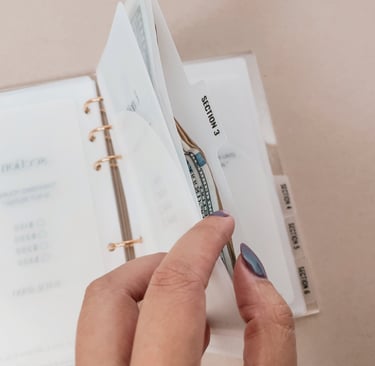
You can purchase budget planner to track your spending. It’s easy to use and printable.
Small changes in your daily choices lead to big changes in your financial future.
BRIGHTER LIFE DESIGN & CO.
Handmade envelopes and budget goods for everyone.
© 2025. All rights reserved.
Privacy Policy
Refund & Return Policy